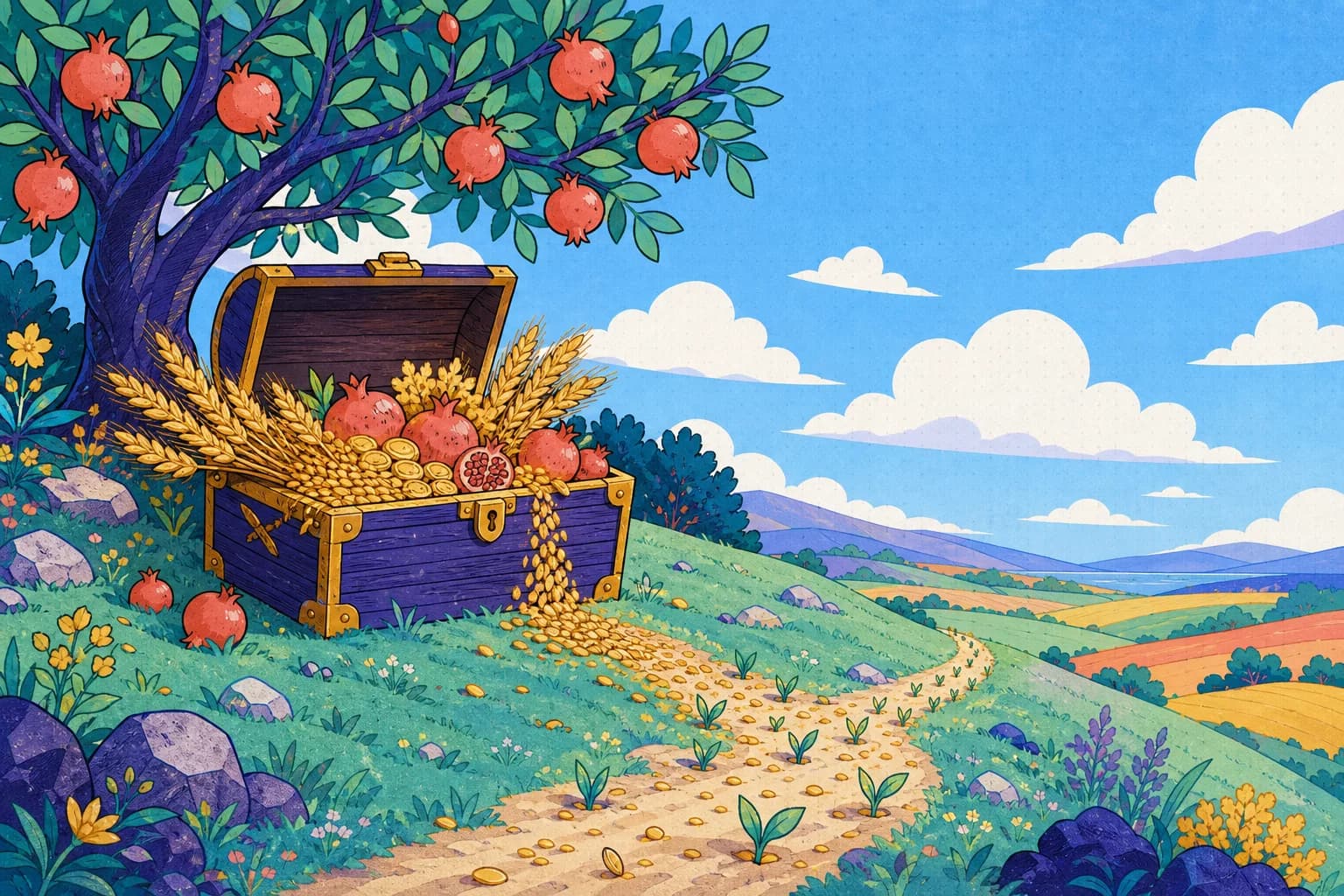
The one thing to remember
Wealth in the Quran is neither a reward nor a curse. It is a test. The rich whom Allah praised named Him as its source, used it to serve, gave before they received, and asked for a good ending at the height of their success.
Many Muslims carry a quiet guilt about money. Wanting more than your parents had can feel greedy, even unspiritual. Others go the opposite way and treat wealth as proof that Allah is pleased with them. The Quran rejects both. It tells the story of people who held enormous wealth and were among the most beloved to Allah, and of one man whose wealth destroyed him. Here are five of the first kind, and what made them different.
1. Sulaymān: it is from my Lord, to test me
Sulaymān asked Allah for a kingdom like no other (38:35), and Allah gave it: the wind, the jinn, a command no king has had since. When the Queen of Sheba's throne was brought to him from another land in the blink of an eye, a moment that would make anyone feel invincible, his first words were:
قَالَ ٱلَّذِى عِندَهُۥ عِلْمٌ مِّنَ ٱلْكِتَـٰبِ أَنَا۠ ءَاتِيكَ بِهِۦ قَبْلَ أَن يَرْتَدَّ إِلَيْكَ طَرْفُكَ ۚ فَلَمَّا رَءَاهُ مُسْتَقِرًّا عِندَهُۥ قَالَ هَـٰذَا مِن فَضْلِ رَبِّى لِيَبْلُوَنِىٓ ءَأَشْكُرُ أَمْ أَكْفُرُ ۖ وَمَن شَكَرَ فَإِنَّمَا يَشْكُرُ لِنَفْسِهِۦ ۖ وَمَن كَفَرَ فَإِنَّ رَبِّى غَنِىٌّ كَرِيمٌ
Said one who had knowledge from the Scripture, "I will bring it to you before your glance returns to you." And when [Solomon] saw it placed before him, he said, "This is from the favor of my Lord to test me whether I will be grateful or ungrateful. And whoever is grateful - his gratitude is only for [the benefit of] himself. And whoever is ungrateful - then indeed, my Lord is Free of need and Generous."
He did not say look what I can do. He named the source, the favor of my Lord, and the purpose, to test me. That is the whole attitude in one sentence.
2. Dāwūd: work in gratitude
Allah gave Dāwūd bounty and made iron soft in his hands, so he could make coats of mail with skill and precision (34:10-11). His son's kingdom was built with vast workshops and reservoirs. And then the instruction to the whole family: “Work, O family of David, in gratitude.” And few of My servants are grateful (34:13).
Notice the word work. Their gratitude was not only something they said. It was how they used what they had: making useful things, ruling justly, worshipping much. The Prophet ﷺ said Dāwūd ate only from what he earned with his own hands, even as a king (Sahih al-Bukhari 2072).
3. Dhul-Qarnayn: what my Lord gave me is better
Dhul-Qarnayn was a ruler whom Allah established on earth and gave the means to everything (18:84). When a people living in fear of Gog and Magog offered to pay him to build a barrier, he turned the money down:
قَالَ مَا مَكَّنِّى فِيهِ رَبِّى خَيْرٌ فَأَعِينُونِى بِقُوَّةٍ أَجْعَلْ بَيْنَكُمْ وَبَيْنَهُمْ رَدْمًا
He said, "That in which my Lord has established me is better [than what you offer], but assist me with strength [i.e., manpower]; I will make between you and them a dam.
He did not need their wealth, so he asked for their help instead: their labour, iron and copper. A rich person in the Quran does not use his position to take more. He uses it to protect people who cannot protect themselves. And when the wall was done, he said: “This is a mercy from my Lord” (18:98).
4. Ibrāhīm: give first
Strangers arrived at Ibrāhīm's home. He did not know who they were, “a people unknown” (51:25). Before asking them anything, he slipped away to his family and “came with a fat [roasted] calf” (51:26), and another passage says he “did not delay” (11:69). A calf was a costly gift: he gave the best of what he had, quickly, to people who could give him nothing back.
The guests turned out to be angels, carrying the good news of a son, Isḥāq. He gave before he knew he would receive. The Prophet ﷺ made this part of faith: whoever believes in Allah and the Last Day, let him honour his guest (Sahih al-Bukhari 6018).
5. Yūsuf: at the top, he asked for a good end
Yūsuf went from the bottom of a well, to slavery, to prison, to running the storehouses of Egypt (12:55). In the famine, the wealth of the land passed through his hands, and he used it to feed people, including the brothers who had thrown him away. At the very end of the story, with his family reunited and his dream fulfilled, he made a dua:
۞ رَبِّ قَدْ ءَاتَيْتَنِى مِنَ ٱلْمُلْكِ وَعَلَّمْتَنِى مِن تَأْوِيلِ ٱلْأَحَادِيثِ ۚ فَاطِرَ ٱلسَّمَـٰوَٰتِ وَٱلْأَرْضِ أَنتَ وَلِىِّۦ فِى ٱلدُّنْيَا وَٱلْـَٔاخِرَةِ ۖ تَوَفَّنِى مُسْلِمًا وَأَلْحِقْنِى بِٱلصَّـٰلِحِينَ
My Lord, You have given me [something] of sovereignty and taught me of the interpretation of dreams. Creator of the heavens and earth, You are my protector in this world and the Hereafter. Cause me to die a Muslim and join me with the righteous."
At the peak of everything, he did not ask for more. He asked to die a Muslim and be joined with the righteous. He knew the real prize was not what was in his hands.
And the one who forgot: Qārūn
The Quran also tells of Qārūn, whose treasure-keys alone would weigh down a band of strong men (28:76). His people told him not to be arrogant, to seek the Hereafter with what he had been given, and to do good as Allah had done good to him. His reply:
قَالَ إِنَّمَآ أُوتِيتُهُۥ عَلَىٰ عِلْمٍ عِندِىٓ ۚ أَوَلَمْ يَعْلَمْ أَنَّ ٱللَّهَ قَدْ أَهْلَكَ مِن قَبْلِهِۦ مِنَ ٱلْقُرُونِ مَنْ هُوَ أَشَدُّ مِنْهُ قُوَّةً وَأَكْثَرُ جَمْعًا ۚ وَلَا يُسْـَٔلُ عَن ذُنُوبِهِمُ ٱلْمُجْرِمُونَ
He said, "I was only given it because of knowledge I have." Did he not know that Allāh had destroyed before him of generations those who were greater than him in power and greater in accumulation [of wealth]? But the criminals, about their sins, will not be asked.
Five rich people said this is from my Lord. One said this is from me. The earth swallowed him and his home (28:81), and the people who had envied him the day before were suddenly grateful they had not been given what he had.
That is the line the Quran draws. Not between rich and poor, but between those who remember whose wealth it is and those who forget. Allah warns that both wealth and hardship are tests: the person who is given plenty says my Lord has honoured me, and the one who is held back says my Lord has humiliated me, and both are wrong (89:15-17).
So, is it okay to want more?
Yes, if you want it the way these five held it. Islam does not ask you to be poor. The Prophet ﷺ said there are only two people worth envying, and one of them is a person whom Allah has given wealth and who spends it rightly (Sahih al-Bukhari 73). Earning well, building a business, providing for your family more comfortably than you grew up: none of this is a sin.
What the five teach is how to hold it: name Allah as the source, use it to serve, give before you receive, and keep your eyes on the ending. For how gratitude itself opens more provision, read Rizq and real wealth.
A common mix-up
What people often think
Wealth is proof that Allah loves you, and poverty proof that He is displeased. Or the reverse: a truly religious person should not want money at all.
What the sources show
Allah says both plenty and scarcity are tests (89:15-17). Prophets were given great wealth and others lived very simply; what Allah praised was gratitude and how the wealth was used. Wanting and earning halal wealth is permitted, and spending it well is praised (Sahih al-Bukhari 73).
The ayahs behind this
قَالَ ٱلَّذِى عِندَهُۥ عِلْمٌ مِّنَ ٱلْكِتَـٰبِ أَنَا۠ ءَاتِيكَ بِهِۦ قَبْلَ أَن يَرْتَدَّ إِلَيْكَ طَرْفُكَ ۚ فَلَمَّا رَءَاهُ مُسْتَقِرًّا عِندَهُۥ قَالَ هَـٰذَا مِن فَضْلِ رَبِّى لِيَبْلُوَنِىٓ ءَأَشْكُرُ أَمْ أَكْفُرُ ۖ وَمَن شَكَرَ فَإِنَّمَا يَشْكُرُ لِنَفْسِهِۦ ۖ وَمَن كَفَرَ فَإِنَّ رَبِّى غَنِىٌّ كَرِيمٌ
Said one who had knowledge from the Scripture, "I will bring it to you before your glance returns to you." And when [Solomon] saw it placed before him, he said, "This is from the favor of my Lord to test me whether I will be grateful or ungrateful. And whoever is grateful - his gratitude is only for [the benefit of] himself. And whoever is ungrateful - then indeed, my Lord is Free of need and Generous."
Sulaymān sees a miracle of wealth and power, and calls it a test of his gratitude.
يَعْمَلُونَ لَهُۥ مَا يَشَآءُ مِن مَّحَـٰرِيبَ وَتَمَـٰثِيلَ وَجِفَانٍ كَٱلْجَوَابِ وَقُدُورٍ رَّاسِيَـٰتٍ ۚ ٱعْمَلُوٓا۟ ءَالَ دَاوُۥدَ شُكْرًا ۚ وَقَلِيلٌ مِّنْ عِبَادِىَ ٱلشَّكُورُ
They made for him what he willed of elevated chambers, statues, bowls like reservoirs, and stationary kettles. [We said], "Work, O family of David, in gratitude." And few of My servants are grateful.
Dāwūd's family are told to work in gratitude, and few are grateful.
قَالَ مَا مَكَّنِّى فِيهِ رَبِّى خَيْرٌ فَأَعِينُونِى بِقُوَّةٍ أَجْعَلْ بَيْنَكُمْ وَبَيْنَهُمْ رَدْمًا
He said, "That in which my Lord has established me is better [than what you offer], but assist me with strength [i.e., manpower]; I will make between you and them a dam.
Dhul-Qarnayn turns down a fortune: what my Lord has given me is better.
۞ رَبِّ قَدْ ءَاتَيْتَنِى مِنَ ٱلْمُلْكِ وَعَلَّمْتَنِى مِن تَأْوِيلِ ٱلْأَحَادِيثِ ۚ فَاطِرَ ٱلسَّمَـٰوَٰتِ وَٱلْأَرْضِ أَنتَ وَلِىِّۦ فِى ٱلدُّنْيَا وَٱلْـَٔاخِرَةِ ۖ تَوَفَّنِى مُسْلِمًا وَأَلْحِقْنِى بِٱلصَّـٰلِحِينَ
My Lord, You have given me [something] of sovereignty and taught me of the interpretation of dreams. Creator of the heavens and earth, You are my protector in this world and the Hereafter. Cause me to die a Muslim and join me with the righteous."
Yūsuf, at the peak of power, asks only to die a Muslim and join the righteous.
قَالَ إِنَّمَآ أُوتِيتُهُۥ عَلَىٰ عِلْمٍ عِندِىٓ ۚ أَوَلَمْ يَعْلَمْ أَنَّ ٱللَّهَ قَدْ أَهْلَكَ مِن قَبْلِهِۦ مِنَ ٱلْقُرُونِ مَنْ هُوَ أَشَدُّ مِنْهُ قُوَّةً وَأَكْثَرُ جَمْعًا ۚ وَلَا يُسْـَٔلُ عَن ذُنُوبِهِمُ ٱلْمُجْرِمُونَ
He said, "I was only given it because of knowledge I have." Did he not know that Allāh had destroyed before him of generations those who were greater than him in power and greater in accumulation [of wealth]? But the criminals, about their sins, will not be asked.
Qārūn's fatal sentence: I was only given it because of my own knowledge.
Today's mission
Pick the one of the five you most need to become this week. If it is Ibrāhīm, give something of real value to someone who cannot repay you. If it is Sulaymān, say hādhā min faḍli rabbī, “this is from the favor of my Lord”, every time something good comes to you.
Duas and dhikr
Glorifying Allah through the day
سُبْحَانَ اللَّهِ وَبِحَمْدِهِ
SubḥānAllāhi wa biḥamdihī.
Glory be to Allah, and praise be to Him. The Prophet ﷺ said whoever says it a hundred times a day has his sins forgiven, even if they were like the foam of the sea.
Sahih al-Bukhari 6405 · Sahih
Asking Allah to keep your heart firm
يَا مُقَلِّبَ الْقُلُوبِ ثَبِّتْ قَلْبِي عَلَى دِينِكَ
Yā muqallibal-qulūb, thabbit qalbī ʿalā dīnik.
O Turner of hearts, keep my heart firm upon Your religion.
Jami' at-Tirmidhi 2140 · Graded sahih by al-Albani
sit with this for a minute…
If Allah doubled what you have tomorrow, which of the five would you be: and would you be any closer to Qārūn?
Know someone who needs this today? Send them the card.
Questions people ask
Who were the rich people in the Quran?
The Quran describes Sulaymān and Dāwūd, who were prophets and kings; Dhul-Qarnayn, a ruler given great means; Yūsuf, who ran the storehouses of Egypt; and Ibrāhīm, who was generous with his wealth. It also tells of Qārūn, whose wealth led to his destruction because he credited it to himself.
Is it a sin to want to be rich in Islam?
No. Wanting and earning halal wealth is permitted. The Prophet ﷺ praised a person whom Allah gives wealth and who spends it rightly (Sahih al-Bukhari 73). What Islam warns against is arrogance, greed, and forgetting that wealth is a test from Allah.
What was Qarun's sin?
Qārūn was given vast treasure and claimed he had earned it through his own knowledge (28:78). He grew arrogant and refused to use it well, and Allah caused the earth to swallow him and his home (28:81).
Sources
- The Quran, Saheeh International translation
- Sahih al-Bukhari 73, 2072, 6018